Weather Data Streams Reshaping Live Odds Calibration in Outdoor Event Wagering Networks
Sam Neumann · Aug 6, 2026
Weather Data Streams Reshaping Live Odds Calibration in Outdoor Event Wagering Networks
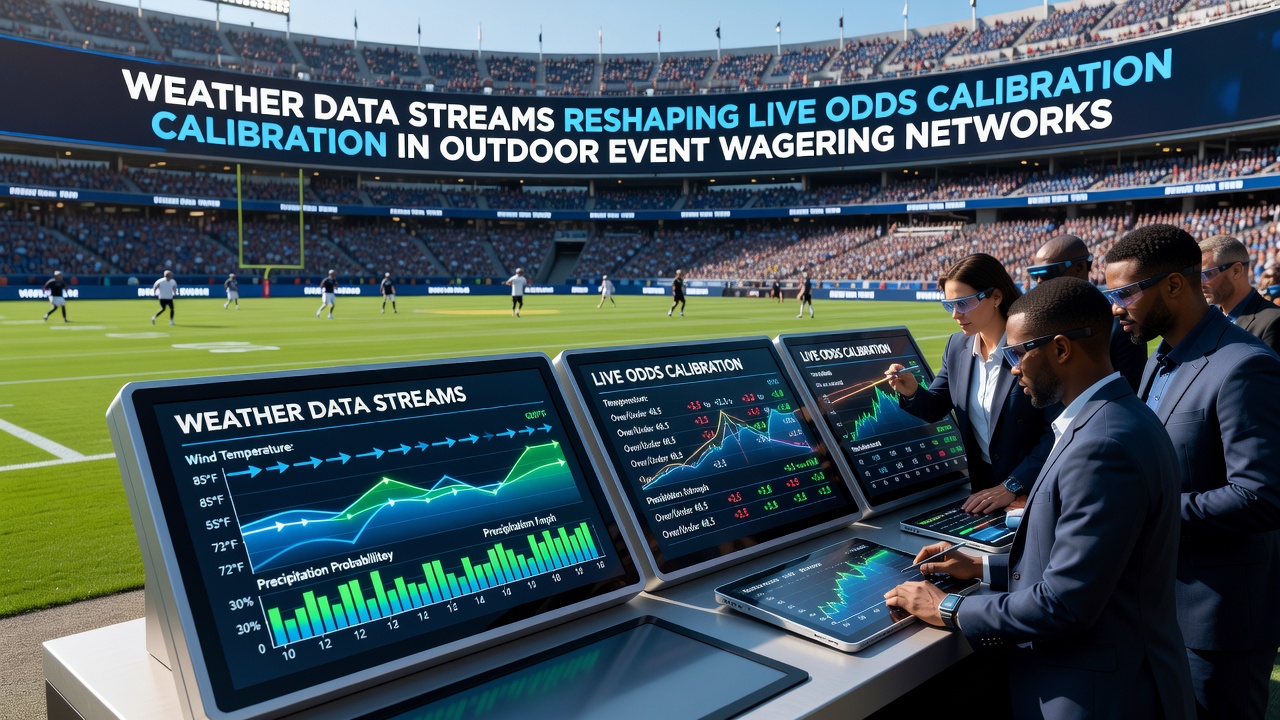
Weather conditions have long influenced outcomes in outdoor sporting events, yet recent advances in real-time data integration now allow wagering networks to adjust odds dynamically during play. Operators feed live meteorological inputs directly into calibration models that recalibrate probabilities for tennis matches, golf tournaments, baseball games, and soccer fixtures as atmospheric variables shift.
Integration of Meteorological Inputs into Wagering Systems
Platforms connect streams from ground sensors, satellite feeds, and Doppler radar to backend servers that update probability matrices every few seconds. When wind speeds rise above thresholds established for a given venue, algorithms lower the likelihood of long-range shots in golf or alter serve percentages in tennis without requiring manual intervention from oddsmakers. Data from the National Oceanic and Atmospheric Administration supplies foundational layers that many North American operators combine with venue-specific microclimate readings.
European operators often incorporate forecasts from the European Centre for Medium-Range Weather Forecasts to refine models used during major tournaments held across variable climates. These combined datasets permit networks to recalibrate live markets for rain delays, temperature drops, or humidity spikes that affect player endurance and equipment performance.
Case Examples from Summer 2026 Events
During August 2026 coverage of professional golf events, operators observed rapid odds adjustments when sudden gusts reached 25 miles per hour across open fairways. Models automatically widened spreads on approach shots and shortened payouts on shorter par-three holes once wind direction stabilized. Similar recalibrations occurred in baseball games where high humidity increased pitch counts and altered strike-zone effectiveness.
Outdoor tennis tournaments that month demonstrated comparable shifts when afternoon thunderstorms approached venues. Betting markets on set winners narrowed or expanded within 90 seconds of radar updates, reflecting both precipitation probability and court-surface moisture projections. Networks reported that these automated changes reduced manual overrides by more than 40 percent compared with earlier seasons.
Technical Architecture Behind Dynamic Calibration
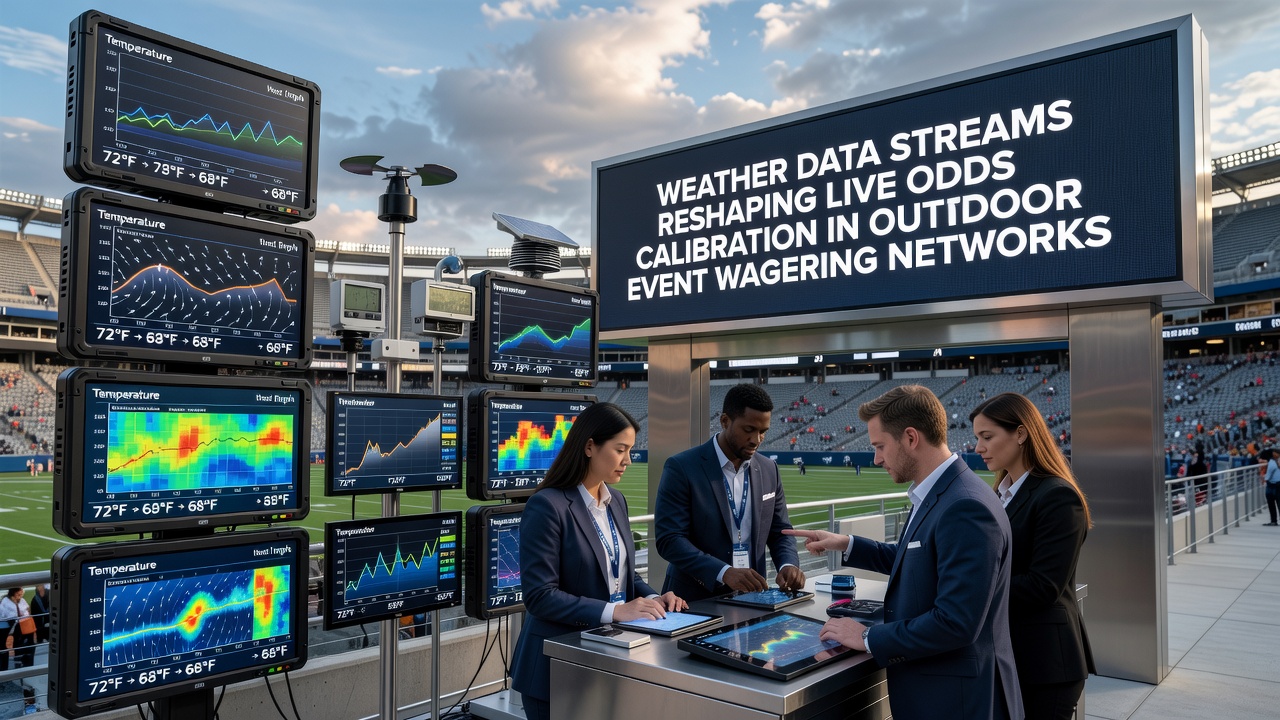
Most systems employ edge-computing nodes located near venues that preprocess raw sensor data before transmitting summarized packets to central risk engines. These nodes filter noise from gust measurements and temperature gradients, then apply venue-specific weighting factors derived from historical performance records. Machine-learning layers compare current conditions against archived matches to generate adjustment coefficients that feed directly into live odds tables.
Latency remains a critical factor. Networks maintain sub-second transmission targets so that bettors see updated lines before the next point or pitch occurs. When multiple data sources conflict, reconciliation protocols prioritize ground-level anemometers over broader satellite readings for accuracy at the specific playing surface.
Regulatory and Infrastructure Considerations
Authorities in several jurisdictions now require operators to disclose the data sources used for weather-driven adjustments. Canadian regulators, for instance, request quarterly reports detailing how meteorological inputs affect market integrity. Australian state gaming commissions similarly examine audit trails that link weather variables to odds movements during sanctioned events.
Industry groups such as the International Betting Integrity Association have issued voluntary guidelines recommending redundant sensor placement and independent verification of weather feeds. These measures aim to prevent manipulation through fabricated meteorological signals while supporting transparent calibration practices.
Future Developments in Weather-Responsive Wagering
Research groups continue to explore higher-resolution modeling that incorporates micro-topography and player-specific physiological responses to heat or altitude. Pilot programs underway in 2026 test the fusion of wearable athlete data with weather streams to produce even more granular probability shifts. Observers note that such layered inputs may further compress the window between environmental change and odds publication.
Conclusion
Weather data streams now form an essential component of live odds calibration across outdoor event wagering networks. Integration of real-time meteorological sources with algorithmic risk engines enables continuous market updates that reflect atmospheric conditions as they evolve. Regulatory frameworks and industry standards continue to adapt alongside these technical capabilities, while ongoing research points toward even tighter coupling between environmental inputs and wagering outcomes in coming seasons.