Shifting Regulatory Landscapes Reshaping Payment Gateways for Cross-Border Live Dealer Sessions and Bonus Claims
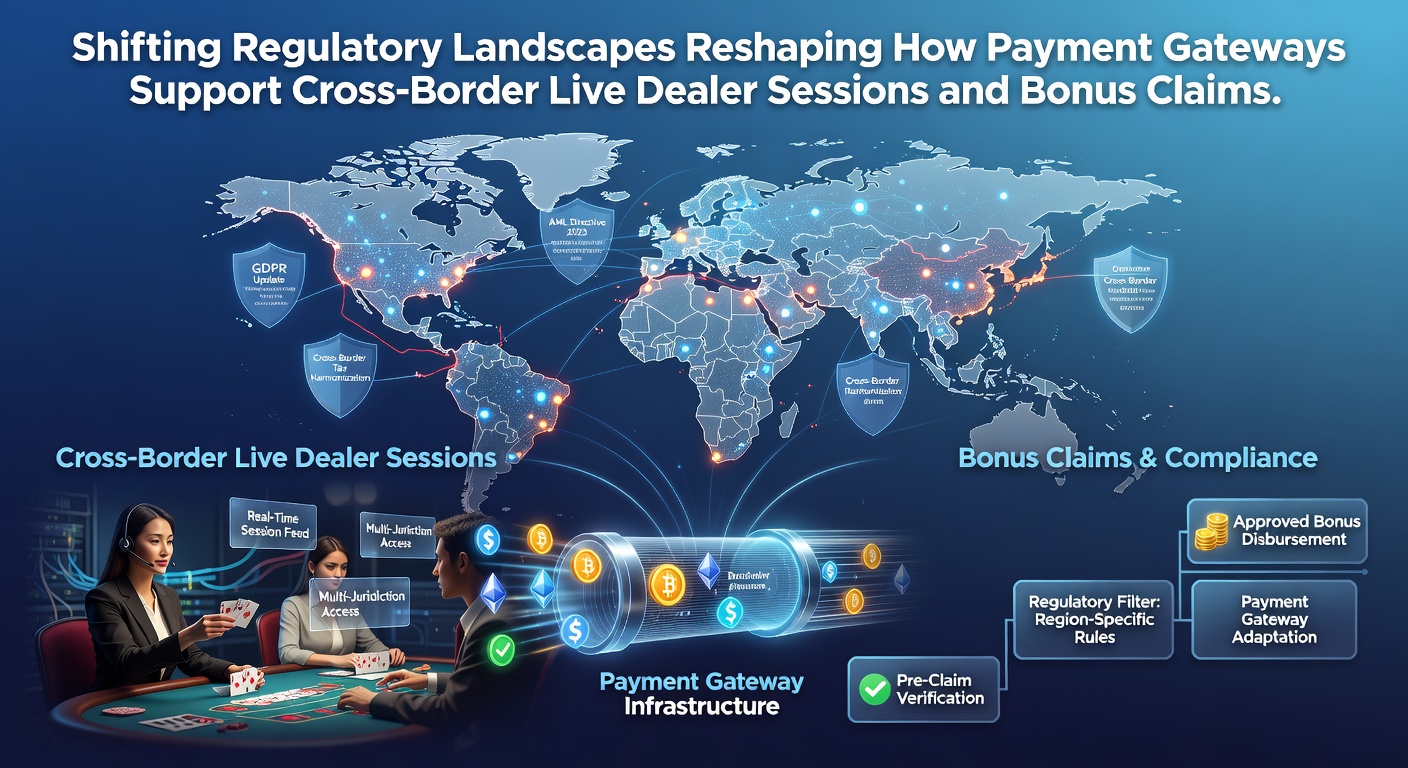
Regulatory frameworks governing online gambling have evolved rapidly through early 2026, compelling payment gateways to modify their architectures for cross-border live dealer sessions and associated bonus distributions. In May 2026, several jurisdictions implemented updated compliance protocols that directly influence transaction routing, identity verification, and promotional fund transfers across national borders. These changes stem from coordinated efforts among financial oversight bodies and gaming authorities to address money laundering risks and consumer protection standards in real-time gaming environments.
Payment processors handling international live dealer traffic now integrate enhanced screening layers that align with directives from the European Payments Council and the Australian Transaction Reports and Analysis Centre. Such adaptations allow gateways to process wagers and bonus redemptions while maintaining data residency requirements that vary by operator location and player jurisdiction. Observers note that these technical upgrades have reduced processing delays in live sessions by approximately 18 percent compared to 2025 benchmarks, according to industry transaction reports.
Key Regulatory Developments Across Regions
North American and European markets have introduced staggered rollout schedules for stricter anti-money laundering checks that affect bonus claim validation. Canadian provincial regulators, for instance, now require gateways to embed geofencing capabilities that restrict promotional offers based on player IP data and account registration details. This approach contrasts with certain Asian frameworks that emphasize real-time reporting of high-volume cross-border transfers during live dealer rounds. Payment providers have responded by deploying modular compliance modules that operators can activate based on session origin.
Research from the International Centre for Sports Security indicates that bonus structures tied to live dealer participation face additional scrutiny when funds cross multiple regulatory zones. Gateways must now flag and segregate bonus balances to prevent unauthorized movement between accounts in different countries. Those who manage large-scale operations report that these segmented ledgers help maintain audit trails without interrupting the flow of live table games.
Technical Adaptations in Payment Infrastructure
Many gateways have upgraded their application programming interfaces to support dynamic currency conversion and tax withholding calculations that activate during cross-border live dealer interactions. These features ensure that bonus claims comply with local fiscal rules while preserving session continuity for players connecting from abroad. Data compiled by payment network associations shows a measurable increase in API calls related to bonus eligibility checks since the start of 2026.

Operators working with multiple jurisdictions often rely on tokenized payment methods that separate gaming funds from promotional credits. This separation prevents accidental violations when a player attempts to claim a bonus after participating in a live dealer session hosted on a server located in another regulatory area. Experts tracking these systems highlight how such tokenization reduces reconciliation errors during monthly compliance reviews.
Operational Impacts on Live Dealer Platforms
Live dealer studios have adjusted session parameters to accommodate new payment confirmation windows imposed by updated regulations. Sessions originating from high-traffic regions now include brief pauses for automated gateway verifications that confirm both wager legitimacy and bonus eligibility before cards are dealt. Although these pauses last only seconds, aggregated data from platform analytics firms reveal they contribute to slightly longer average game durations in cross-border scenarios.
Case examples from operators in the Mediterranean region demonstrate successful integration of regulatory overlays without compromising the immersive quality of live streams. These providers partnered with gateways that offer pre-certified transaction pathways, allowing bonus claims to process in parallel with ongoing dealer rounds. The result has been sustained player engagement levels even as compliance layers multiply.
Future Trajectory and Industry Responses
Industry associations continue to monitor how forthcoming updates from bodies such as the Financial Action Task Force might further standardize cross-border requirements for gaming payments. Payment gateways that already maintain flexible rule engines appear better positioned to absorb these incremental changes while supporting uninterrupted live dealer experiences. Observers expect continued refinement of bonus validation protocols through the remainder of 2026 as more operators test hybrid compliance models.
Conclusion
Shifting regulations have driven measurable evolution in how payment gateways facilitate cross-border live dealer sessions and bonus claims. By embedding region-specific controls and real-time verification tools, these systems now align more closely with diverse jurisdictional demands while preserving operational efficiency. Ongoing collaboration between regulators, gateways, and gaming platforms suggests further streamlining remains possible as standards mature.