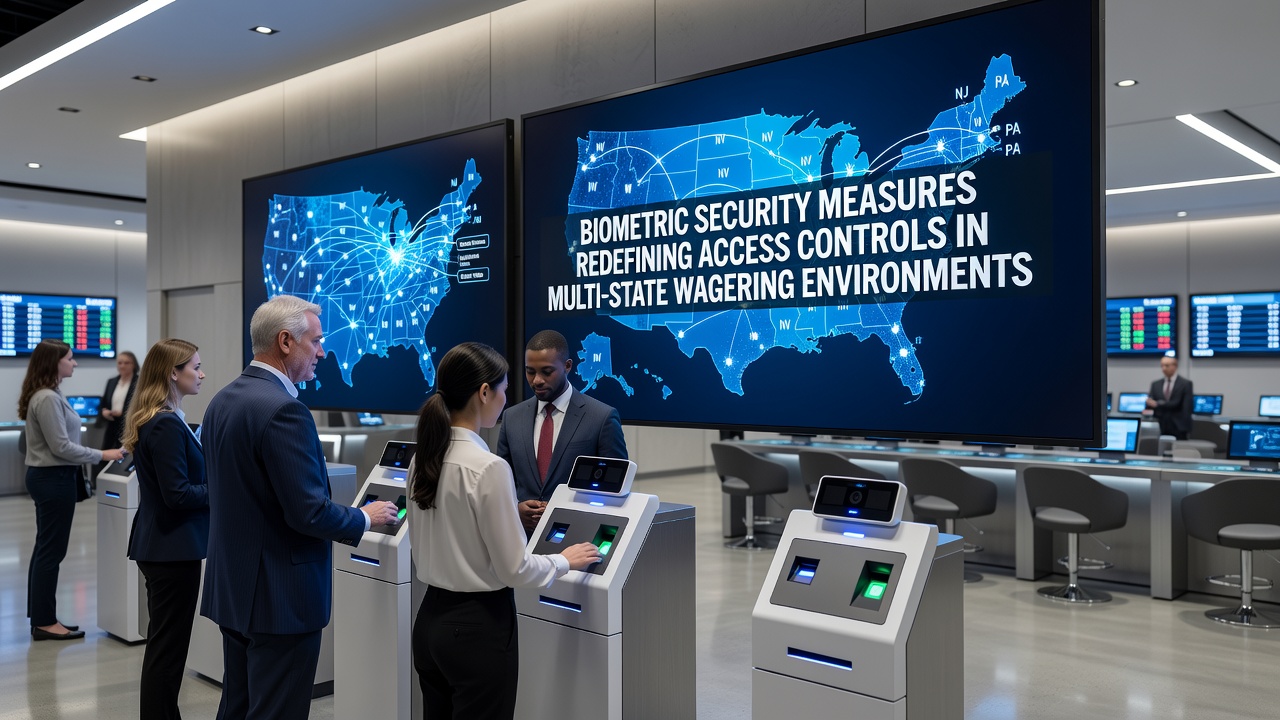
Biometric Security Measures Redefining Access Controls in Multi-State Wagering Environments

Multi-state wagering platforms now rely on biometric security measures to handle access controls across different regulatory jurisdictions, and operators integrate fingerprint recognition, facial analysis, and voice patterns to verify user identity before any betting activity begins. These systems connect directly to state databases that track age requirements and location compliance, which reduces reliance on traditional password methods that often face repeated breaches.
Core Technologies Driving Verification Processes
Facial recognition software scans live images against stored templates while accounting for lighting variations and device angles, and fingerprint sensors embedded in mobile apps capture ridge patterns that match against encrypted records held by licensed operators. Voice authentication adds another layer by analyzing speech frequencies during account logins, and studies from research institutions show error rates dropping below 0.1 percent when multiple biometric types combine in a single session.
Operators deploy these tools to meet geofencing rules that shift from state to state, and data from the Nevada Gaming Control Board indicates biometric adoption rose sharply through early 2026 as platforms expanded into new markets. Integration happens through APIs that pull real-time location data alongside biometric matches, which allows seamless transitions for users crossing state lines without repeated manual checks.
Handling Regulatory Differences Across Jurisdictions
Each state maintains its own licensing standards for player verification, and biometric platforms adjust protocols to satisfy Pennsylvania requirements alongside those in New Jersey or Michigan. Software developers build modular systems that switch verification intensity based on the detected location, and observers note that this flexibility prevents service interruptions during peak betting periods.
June 2026 brought updated reporting mandates in several states that require operators to log biometric match confidence scores for audit purposes, and these logs help regulators confirm that access controls remain consistent even as user volumes fluctuate. Platforms that failed to adapt quickly encountered temporary license reviews, which pushed wider adoption of standardized biometric frameworks.
Security Outcomes and Data Patterns
Industry reports reveal fewer account takeover incidents after biometric rollout, and figures from the American Gaming Association show a 40 percent decline in unauthorized access attempts across monitored multi-state networks during the first half of 2026. Encryption protocols store biometric templates as mathematical hashes rather than raw images, which limits exposure if a database faces compromise.
Take one platform that introduced iris scanning for high-value accounts, and records indicate verification times averaged under two seconds while maintaining compliance across five states simultaneously. Researchers at academic centers tracking wagering security note that these speed gains occur alongside stronger fraud detection because anomalies in biometric patterns trigger immediate account holds.
Implementation Challenges and Solutions
Device compatibility remains a hurdle because older smartphones lack advanced sensors, and operators address this by offering fallback options that combine partial biometrics with additional identity documents. Privacy regulations in some states demand explicit user consent before template storage, and platforms now present clear opt-in flows that explain data handling in plain language.
Maintenance of biometric databases requires regular updates to match evolving state rules, and vendors supply cloud-based dashboards that flag mismatches or policy changes in real time. Those who've examined cross-border operations find that shared biometric standards between neighboring states reduce redundant verifications and improve user retention metrics.
Future Directions in Access Control
Emerging standards from international gaming associations encourage interoperability between biometric systems used in different countries, and early tests show successful handoffs for users traveling between U.S. and Canadian platforms. Machine learning models continue to refine matching algorithms by analyzing large datasets of verified sessions, which leads to lower false rejection rates over successive updates.
State regulators continue to evaluate new biometric modalities such as gait analysis captured through device accelerometers, and pilot programs launched in mid-2026 aim to test these methods against existing frameworks. Data collected during these trials will inform whether additional verification layers become mandatory in future licensing cycles.
Conclusion
Biometric security continues to reshape access controls by aligning verification methods with the complex demands of multi-state wagering environments, and ongoing refinements ensure these systems keep pace with regulatory shifts and technological advances. Operators that maintain robust biometric infrastructure report sustained compliance records while supporting growing user bases across jurisdictions.